


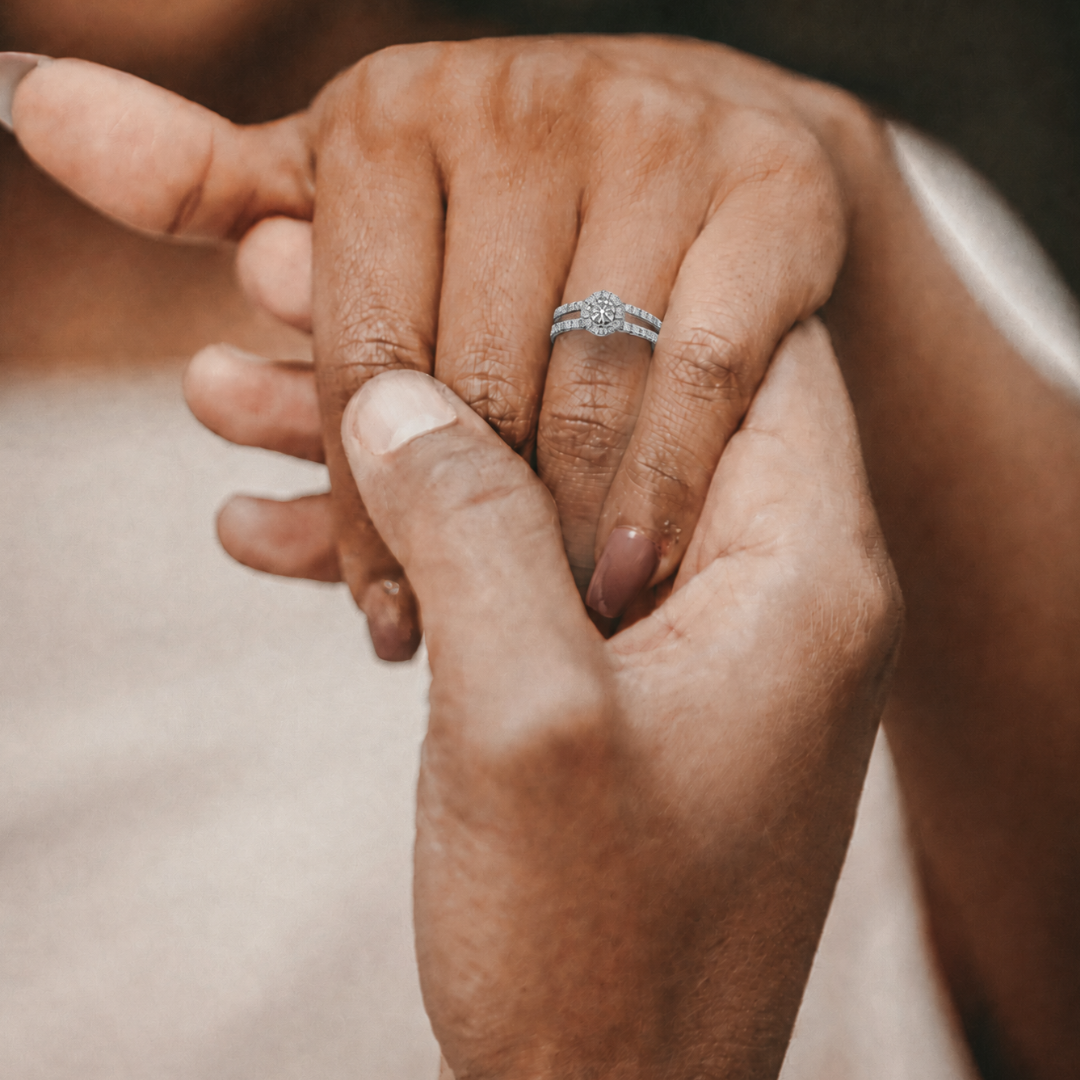

An engagement ring is made up of several elements, but the setting plays one of the biggest roles in determining its overall appearance. The setting holds the diamond or gemstone in place while also influencing how much light reaches the stone, how prominent it appears, and how the ring looks on the hand.
For anyone exploring engagement ring designs, understanding different engagement ring settings can make the selection process much easier.
From classic solitaire designs to glamorous halo settings and elegant three stone rings, each style creates a different effect.
What Is an Engagement Ring Setting?
The setting is the part of the ring that holds the centre diamond or other gemstone securely.
It can refer to the structure around the stone as well as the overall arrangement of diamonds across the ring.
The setting affects several aspects of the finished ring, including:
- The appearance of the centre stone
- The amount of visible metal
- The amount of sparkle
- The height of the diamond
- The ring’s overall style
- How the engagement ring sits beside a wedding band
- How practical the ring is for everyday wear
Choosing a setting should therefore involve more than simply deciding which design looks attractive in a photograph.
Solitaire Engagement Ring Settings
The solitaire is one of the most recognisable engagement ring styles.
It features a single centre diamond without additional stones surrounding it.
Because there are fewer visual distractions, the centre diamond becomes the main focus.
Solitaire settings can work with many diamond shapes, including round, oval, pear, emerald and princess cuts.
This style can be particularly appealing to someone who prefers a clean and timeless appearance.
Halo Engagement Ring Settings
A halo setting places smaller diamonds around the centre stone.
The surrounding diamonds create additional sparkle and can make the centre stone appear more prominent.
Halo designs can have different personalities depending on the shape of the centre diamond and the arrangement of the surrounding stones.
A round centre diamond with a round halo can create a traditional appearance, while an oval or pear shaped centre stone can produce a more distinctive silhouette.
Three Stone Engagement Rings
Three stone settings feature a centre diamond accompanied by two additional stones.
The three diamonds can be similar in shape or arranged to create a central focus.
This setting provides more visual detail than a traditional solitaire while still maintaining a relatively balanced design.
The proportions of the three stones can also change the overall appearance of the ring.
Pavé Engagement Ring Settings
In a pavé setting, smaller diamonds are positioned closely along the band.
This creates a continuous appearance of diamonds across part of the ring.
Pavé can add considerable sparkle without requiring a large centre stone.
It can also be combined with solitaire, halo and other centre stone designs.
Bezel Engagement Ring Settings
A bezel setting surrounds the edge of the centre stone with a rim of metal.
This creates a clean and contemporary appearance while holding the stone securely within the setting.
Because the metal surrounds part of the diamond, the visual effect differs from a traditional prong setting.
Bezel designs can appeal to people who prefer modern jewellery with a practical profile.
Prong Settings
Prongs are small metal claws that hold the diamond in place.
A four prong or six prong arrangement is commonly used for engagement rings.
One advantage of a prong setting is that more of the diamond remains visible.
The design can therefore allow considerable light to enter the stone while keeping the metal around it relatively minimal.
The number and arrangement of prongs can also affect the appearance of the finished ring.
Cathedral Engagement Ring Settings
A cathedral setting uses raised sections of metal that curve upward toward the centre stone.
This creates a more elevated appearance and can add architectural detail to the ring.
The additional height can also create space for a wedding band to sit beneath the centre stone, although the exact fit depends on the ring’s construction.
Choosing a Setting for Different Diamond Shapes
The diamond shape and setting should work together.
Round Diamonds
Round diamonds are highly versatile and can work with solitaire, halo, pavé and many other settings.
Oval Diamonds
Oval diamonds have an elongated shape that can create a graceful appearance. They can work particularly well with solitaire and halo designs.
Emerald Cut Diamonds
Emerald cut diamonds have broad step cut facets and a distinctive rectangular appearance.
Their clean lines can work especially well with simple settings that allow the shape to remain the visual focus.
Pear Shaped Diamonds
Pear shaped diamonds combine a rounded end with a pointed tip.
They can create a distinctive engagement ring silhouette and can be positioned in different orientations depending on personal preference.
Marquise Diamonds
Marquise diamonds have a long, narrow shape with pointed ends.
Their distinctive outline can make a ring feel more individual, particularly when paired with a relatively simple setting.
How the Setting Affects Diamond Appearance
The setting can change how large or prominent a diamond appears.
A halo of smaller diamonds can create the impression of a larger centre stone. A slim band can also make the centre diamond appear more prominent by creating visual contrast.
A raised setting can give the stone additional presence, while a lower profile can create a more understated appearance.
This is why two rings containing diamonds of similar specifications can still look very different when worn.
Consider Your Lifestyle Before Choosing a Setting
An engagement ring is normally worn far beyond the proposal.
Your everyday activities should therefore be considered when choosing a setting.
Someone who regularly works with their hands may prefer a lower profile design with fewer exposed details.
Someone who mainly works in an office environment may have more flexibility when choosing a raised or highly detailed setting.
Consider whether the ring will be worn during exercise, travel, household tasks or other activities.
The most attractive setting is not necessarily the most practical one for every lifestyle.
Choosing a Setting That Works With a Wedding Band
The engagement ring and wedding band will eventually be worn together, so it is worth thinking about their combination from the beginning.
A high solitaire setting may allow a wedding band to sit neatly beneath the centre stone.
A large halo or unusually shaped setting may require a curved or contoured wedding band.
Some couples prefer a small gap between the two rings, while others want them to sit closely together.
If you already have a wedding band style in mind, consider how the engagement ring setting will interact with it.
Gold, White Gold and Platinum Settings
The metal surrounding the diamond can also change the appearance of the setting.
Yellow gold creates a warm and traditional look.
White gold provides a bright, contemporary appearance that can blend naturally with colourless diamonds.
Rose gold introduces a warmer pink tone and can give traditional settings a more distinctive character.
Platinum offers a naturally white metal option and can work particularly well with minimalist engagement ring designs.
The same setting can therefore look quite different depending on the metal selected.
Custom Engagement Ring Settings
A custom engagement ring can combine elements from different setting styles.
For example, someone might want a solitaire centre diamond with a subtle pavé band. Another person might prefer a three stone arrangement with a distinctive metal finish.
Customisation can also involve the shape, height, proportions and decorative details of the setting.
The advantage of considering these elements together is that the finished ring can be designed around the wearer’s preferences rather than selected entirely from standard designs.
How to Compare Engagement Ring Settings
When comparing settings, avoid looking only at photographs.
Consider:
- How securely the centre stone is held
- How high the diamond sits
- How much metal is visible
- Whether the design suits everyday wear
- How the ring feels on the finger
- Whether a wedding band can sit comfortably beside it
- How easy the setting may be to maintain
- Whether the setting complements the chosen diamond shape
These details can help you distinguish between designs that may initially appear very similar.
Finding the Right Engagement Ring Style
There is no single setting that suits everyone.
Some people are drawn to the simplicity of a solitaire. Others prefer the additional sparkle of a halo, the symbolism of a three stone design, or the clean lines of a bezel setting.
The diamond shape, metal, lifestyle and future wedding band should all be considered together.
Rather than choosing a setting simply because it is popular, think about how the design fits the person who will wear it.
Final Thoughts on Engagement Ring Settings
The setting is one of the most important design decisions when choosing an engagement ring.
It influences the appearance of the diamond, the amount of sparkle, the ring’s profile, its everyday practicality and how it works with a future wedding band.
Whether you prefer a classic solitaire, a detailed halo, a three stone arrangement, a pavé band or a contemporary bezel design, understanding the differences can make the selection process much clearer.
For anyone researching engagement ring designs in South Africa, comparing settings alongside diamond shapes and metals can help create a ring that feels both beautiful and personal.
Frequently Asked Questions
What is the most common engagement ring setting?
The solitaire is one of the most recognisable engagement ring settings. It features a single centre diamond and keeps attention focused on the stone.
What is a halo engagement ring setting?
A halo setting places smaller diamonds around the centre stone. The surrounding stones add sparkle and can make the centre diamond appear more prominent.
Is a bezel setting suitable for everyday wear?
A bezel setting can provide a practical design because metal surrounds the edge of the centre stone. However, the suitability of any setting depends on its specific construction and the wearer’s lifestyle.
What setting makes a diamond look bigger?
A halo setting can create the visual impression of a larger centre diamond because smaller stones surround it. Band proportions can also influence how prominent the centre stone appears.
Should the engagement ring setting match the wedding band?
They do not need to match exactly. However, the shape and height of the engagement ring setting should be considered so that the two rings can sit comfortably together.
Which setting is best for an active lifestyle?
A lower profile setting with secure stone placement may be more practical for someone who regularly uses their hands. The specific design and construction should still be considered.
Can an engagement ring setting be customised?
Yes. Custom designs can combine different setting features, metals, diamond shapes and decorative details to create a more personalised ring.
Does the metal affect the appearance of an engagement ring setting?
Yes. Yellow gold creates a warm appearance, white gold offers a bright white look, rose gold provides a warmer tone, and platinum has a naturally white appearance.